
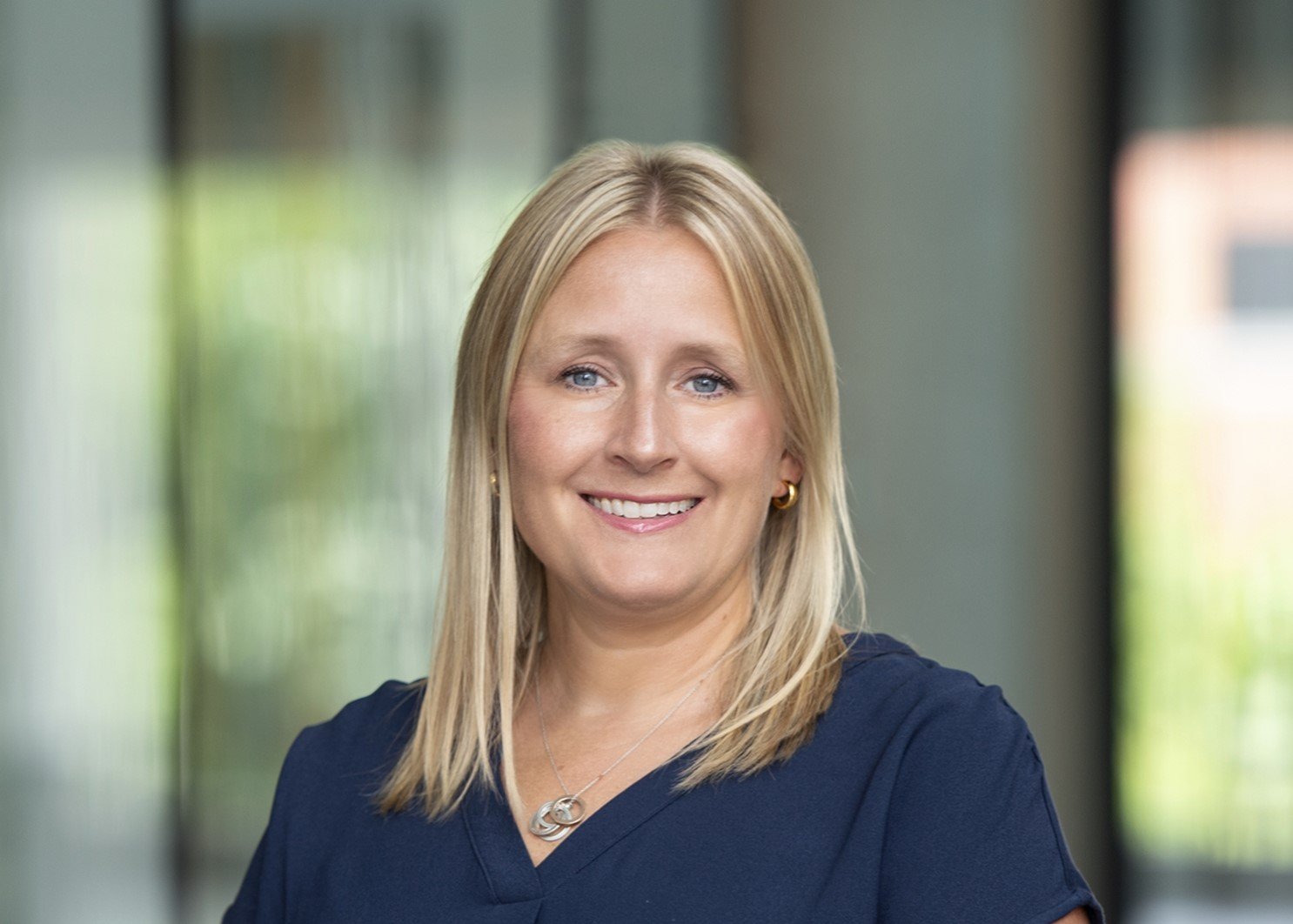
Amber Boyd, PT, DPT, DHSc, MBA, Board-Certified Sports Clinical Specialist, Emeritus, is an Associate Professor and Program Director in the Doctor of Physical Therapy Program at the University of Cincinnati. She is a member of ASAHP’s Clinical Education committee and participated as a hub host at ASAHP’s 2026 Regional Summit.
ASAHP: How did ASAHP’s 6th annual Regional Summit on May 20 build on the previous Regional Summits?
Amber Boyd: The first Regional Summits focused on the clinical education committee's recommendations for clinical education, getting stakeholders’ input on those recommendations, and seeing them in practice.The summits then shifted to the new IPEC core competencies, version three, to gauge how aware people are of the new core competencies, and how they are implemented in practice. For this year’s Summit, we wanted to go a bit further and focus on actionable items related to identifying key enablers for interprofessional education and collaborative practice. We also wanted to explore how we can lift communication barriers for a more streamlined and efficient way of disseminating information to both academic and industry partners.
ASAHP: What were some of the key takeaways from the day?
Amber Boyd: There were some great takeaways from all of the Regional Hubs. A headline was recognizing the need to assess IPE outcomes more clearly. We need more data from clinical education sites, how they're doing IPE, and what needs they have at the clinical sites to get the data, so that we can implement this more readily at the academic institutions and translate it to practice.
ASAHP: The theme of this year’s summit was From Classrooms to Care Teams: Workforce-Ready Graduates. Can you give some examples of how this Summit will help graduates become more workforce-ready?
Amber Boyd: In order for graduates to be workforce ready, all stakeholders need to be at the table and on the same page of understanding what it means to be workforce ready. At each of the Summit Hubs, there were industry partners on site as well as academic faculty, field workers, preceptors and administrators from clinical sites. It was valuable having this group come together to discuss what academic institutions are seeing in terms of workforce readiness and what the industry sites are seeing. It was incredibly valuable to set aside intentional time to gather information and input from everyone to come to a common understanding of what it means to be workforce ready. The academic institutions can then prepare students to hit the ground running, either through clinicals or when they're a new graduate.
ASAHP: What do you think was the benefit of having healthcare industry and academic partners in the same room for a day?
Amber Boyd: It's very rare to have hospital administrators in the same room as academic faculty. Having intentional time for collaboration allowed us to have cross pollination discussions of how we can help train the future of healthcare. Being able to come together like this helps better prepare students which, ultimately, benefits the patients and the broader community.
ASAHP: This is the fourth year that the University of Cincinnati has participated in the Regional Summits. What keeps you coming back, and how do you think the Regional Summits have benefited not only your school but also the Cincinnati region in general?
Amber Boyd: At University of Cincinnati, we’re big believers in interprofessional education and collaborative practice. Our College of Allied Health Sciences is interprofessional by design with many disciplines under the same roof. In addition, as part of the academic health center we have the College of Pharmacy, the College of Nursing, College of Medicine. And, our partner institutions such as Cincinnati Children's Hospital, the Cincinnati VA, and UC Health, are all within a one-block radius. It makes perfect sense for us to be a Hub Host because we already integrate each other's ideas and disciplines every single day. What keeps us coming back is that we're able to have these enriched conversations with our partners, so we know what they need from us and vice versa. It's a win-win on both sides. Because we’ve participated for four years now, word is getting out and people are starting to see the value. We’re having more partners join, some from further away and some from smaller clinical sites that aren't connected to hospitals. This allows for a multitude of voices to be heard on summit day.
ASAHP: Was there anything that surprised you or other participants about this year's summit?
Amber Boyd: What surprised me on the pre-summit survey side, was that many of the learning experiences were not very high tech. Many were case studies, role play, or projects where individuals were coming together in interprofessional teams instead of high fidelity simulations. I had assumed many people would be incorporating simulation into IPE experiences. It was also interesting to learn that respondents were saying students struggled with collaboration in real time or during clinicals. That's why the Hubs at the Regional Summit are so important, because it’s an in-person discussion rather than emails where things could get lost in translation.
ASAHP: How has your relationship with industry partners changed as a result of participating in this Summit?
Amber Boyd: It's been wonderful. We're able to have these open conversations and discussions of what we are doing to better prepare students, but also what our partners need and what they're seeing at the bedside. We've also been fortunate to have an industry sponsor the last couple years. Kroger Health has been able to sponsor our site and is embedded deeply in the Cincinnati community. They have different clinics throughout the city, as well as an interprofessional clinic for our students here in the Academic Health Center. It speaks to their commitment, not only as a sponsor, but to patient care. We're fortunate to have a great relationship with Kroger Health, as well as other industry partners. We’re all working towards the same goal and it’s been very valuable to grow relationships with all of our partners.
ASAHP: What learnings from the regional summit will take you back to your role on the Clinical Education Committee?
Amber Boyd: One of the big things that I heard, not only in the summit survey, but also during summit day, was that there was a call for developing templates for how to facilitate IPE discussions among students and their preceptors at clinical sites. As a committee, we will look at how we can make that easier and more efficient because that’s our forte. We're hoping to connect with our counterparts at the interprofessional committee as well to determine how we can work together to develop toolkits, templates and prototypes for our clinical partners, so that students can be trained to meet workforce demands.
ASAHP: What would you say to ASAHP members who've thought about participating in the regional summit in years past, but haven't?
Amber Boyd: I would definitely encourage them to attend a summit, host a hub or even participate in the national exchange, because only good things come from it. You grow with your university where you're hosting the summit or your network with other institutions who come to participate. You grow with your industry partners. It’s a wonderful learning experience for students, many of whom are scribes at our institution and the students have incredible takeaways from hearing the exchange that's happening between all different levels. If you're on the fence, at least try the national exchange for the last part of the day.
ASAHP: Is there anything else you’d like to add about the regional summits?
Amber Boyd: I really appreciate that ASAHP hosts the summit every year. It's important to have these conversations to understand what's going on at our industry partners, because we can't train students without knowing the other side, and vice versa. ASAHP is key in this whole operation, because they're the ones that put this on and ensure that we’re having productive conversations, and moving the needle forward. ASAHP constantly pushes to do better, not only for its member institutions, but for the communities that those institutions serve.