
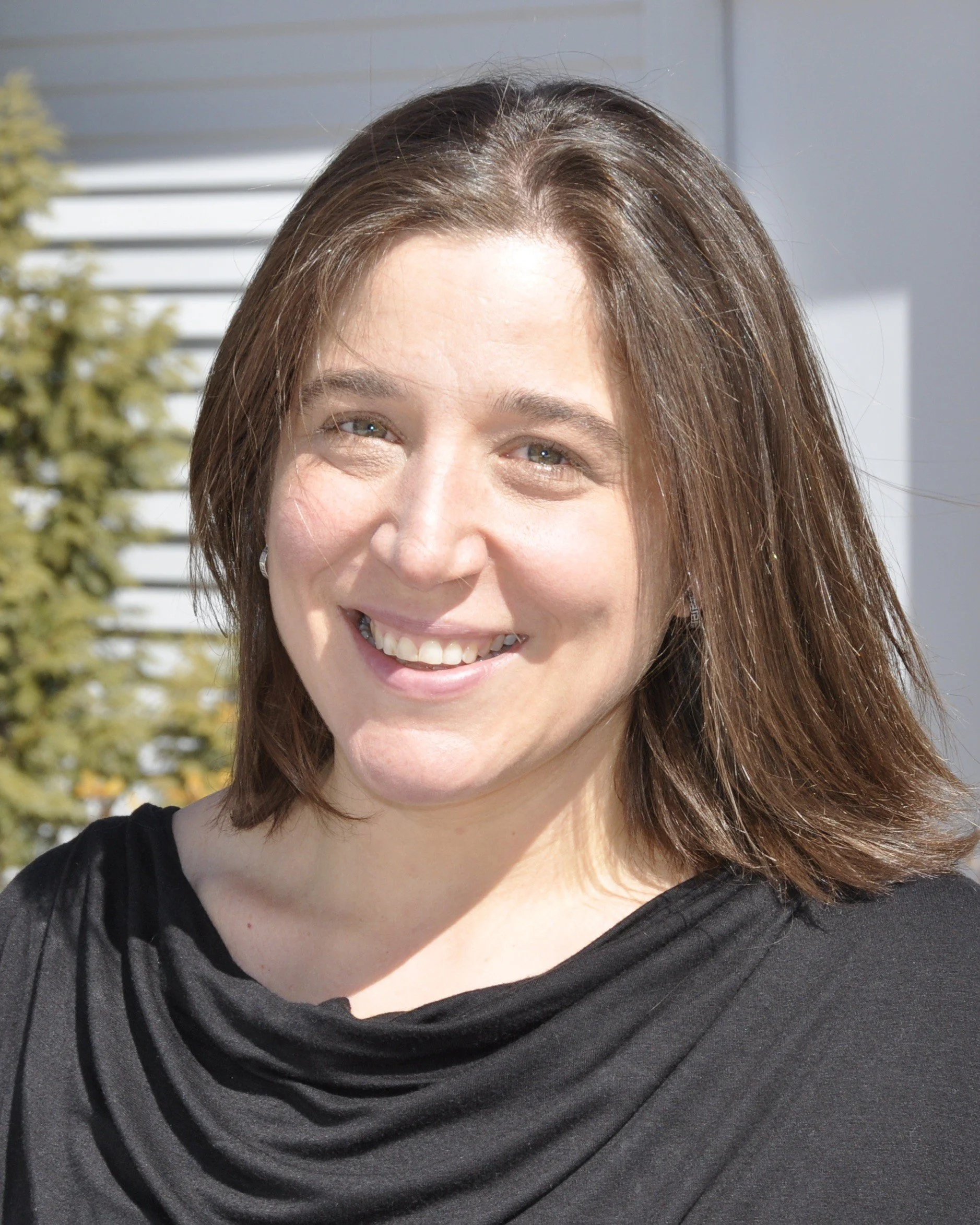
Dr. Mansour’s work focuses on health professions education, clinical education, and the thoughtful integration of artificial intelligence into teaching and learning.
Prior to joining Northeastern, Dr. Mansour served as an Academic Fieldwork Coordinator in the entry-level Doctor of Occupational Therapy program at the MGH Institute of Health Professions, which, as of September 1, is now called ‘Mass General Brigham University of Health Professions.’ She remains affiliated with the institution as a doctoral capstone mentor in the entry-level OT program and is pursuing her PhD in Health Professions Education, where her research examines the AI-related competencies, knowledge, and skills needed by healthcare professionals and educators to responsibly integrate artificial intelligence into education and practice.
An occupational therapist for nearly 25 years, Dr. Mansour has extensive experience supporting clinical education across both practice and academic settings. Her recent scholarship and national presentations explore how artificial intelligence can support health professions educators and learners while maintaining strong clinical reasoning, communication, and human-centered practice.
At ASAHP’s Annual Conference in Nashville this October, Dr. Mansour will contribute to several sessions focused on artificial intelligence and innovation in health professions education.
ASAHP: Give us a taste of what members can expect to hear from you about AI at the ASAHP Annual Conference?
Tara Mansour: I'll be approaching AI from three different angles at the conference. First, I'm helping to organize a panel about how institutions move from early conversations about AI to actual implementation. That's especially interesting to me because I helped lead that work at the MGH Institute, and now I'm entering Northeastern, where there is already a significant infrastructure and investment around AI in teaching, learning, and research. I'll also present a session exploring how AI support agents can be designed to provide students with more individualized, just-in-time opportunities for learning and practice, including some examples from clinical education and documentation skill development. Finally, I'm presenting a poster on a fieldwork readiness study we did. What's significant about that is we used AI-assisted qualitative analysis to analyze the data, and it was an article that was recently published. So collectively at the conference, these sessions span from institutional strategy, educational innovation, and research methodology.
ASAHP: Do you think there are benefits of AI that are unique to health professions?
Tara Mansour: Absolutely! AI offers some benefits in health professions that are especially valuable because so much of our work depends on applying knowledge in complex human situations. Students are not only learning information; they're learning how to communicate with patients and families, respond to uncertainty, adapt when situations change, and make sense of multiple pieces of information at once.
AI can create opportunities for additional practice, and practicing those skills before the stakes are real. At the same time, health professions have to be careful about assuming that AI applications developed in one clinical discipline can automatically translate to another. There has been tremendous exploration of AI in higher education broadly, and in medical education more specifically, but much less attention to the rehabilitation sciences.
Our work in rehabilitation is often focused on understanding the individual person, their environment, and what they need or want to be able to do, rather than centering primarily on diagnosis or disease identification, like it is in medicine. Something like ambient documentation illustrates that difference. Ambient documentation is a tool designed around capturing physician and patient conversation to support documentation, and that may work very differently in a practice like occupational therapy, where silence or limited prompting or verbal communication can actually be intentional, because we're observing how someone initiates, problem solves, sequences, or performs a task independently. It’s important to think in terms of how AI can support or enhance what a skilled clinician, educator, or student is already trying to accomplish. The human in the loop piece is especially important in healthcare because clinical care really depends on judgment, relationships, context, and trust.
ASAHP: How do you mitigate the risk of trusting AI information to guide health intervention efforts?
Tara Mansour: This is an area where I'm very careful to stay within my expertise. My work is focused on AI in health professions education, not on developing or training clinical AI systems. I would never suggest that someone use a general purpose AI tool for medical or treatment advice. Large language models are not evidence-based clinical resources. They are fundamentally predicting likely language based on the patterns in their training data, and a very convincing response can still be wrong. So I see AI potentially as helping clients or patients generate questions they might bring to their physician or another qualified healthcare professional, but I would never position it as a substitute for clinical judgment or evidence-based healthcare.
ASAHP: How did you come to work in Occupational Therapy?
Tara Mansour: My journey to and within occupational therapy has taken quite a few turns. But one thread that has been there from the beginning is this interest in technology and how it can expand what's possible for people. My mother lived with multiple sclerosis and later a traumatic brain injury, so rehabilitation was part of my world early on. During college, I completed an internship in an inpatient rehab hospital, where I really began to understand what occupational therapy was. When I entered OT school, I was convinced I would specialize in assistive technology, particularly working with people with spinal cord injuries and using technology to increase their independence and control over their environments. Interestingly, technology also became part of my graduate education in a way that still feels very relevant to the work I'm doing now. During my own entry-level OT education, I was connected with a company using videoconferencing to support individuals with traumatic brain injuries, and at the time, many of those around me questioned whether meaningful OT services could truly be delivered through a computer. Looking back from where we are now with telehealth, that experience has stayed with me because I see a very similar hesitation emerging around AI: when a technology challenges our traditional ideas about how care, education, or human connection should happen, our first instinct can be to focus on what might be lost rather than thoughtfully exploring what the technology might make possible.
ASAHP: What led you to specialize in AI education?
Tara Mansour: My role as academic fieldwork coordinator is where I started the application of that work. I was hearing from clinical instructors that they wanted our students to be more creative in developing their interventions. Having supervised students myself in clinical practice, I understood what they meant. I always appreciated when a student came prepared with a fresh idea or a different way of approaching a familiar challenge. But as an academic fieldwork coordinator, I also saw the issue from a different perspective. While I understood why clinical instructors wanted students to arrive with a broader repertoire of intervention ideas, I was more concerned about where students were spending their cognitive load. They didn't have the same depth of experience or a toolbox of ideas that an experienced clinician could draw from automatically, and I didn't want them using so much of their mental energy trying to invent a novel activity that they had less capacity for the clinical reasoning underneath it. Were they providing the right amount of challenge? Were they treating the patient at the most appropriate level? Could they recognize a change in the patient's presentation or status and adjust the plan for the session in real time?
At the same time, I had three teenagers at home who introduced me to this new app on their phones called ChatGPT, and I remember thinking about the way we teach students to conduct a literature search, choosing language intentionally, refining search terms, and evaluating what comes back. I wondered whether we could teach students to interact with generative AI in a similarly deliberate way. I designed an assignment to teach students how to construct a thoughtful prompt and protect patient information, and then to use AI to generate possible intervention ideas. The AI output was only the starting point. Students then had to go back to the peer-reviewed literature, the patients' chart, their textbooks, and other trusted sources to determine whether the AI-generated idea was actually appropriate and to justify why they would or would not use it. I published the results in Frontiers of Medicine and that article generated far more interest than I could have ever anticipated. What started as one lecture and an assignment quickly grew into research, curriculum development, faculty development, clinician development, and eventually a much broader focus on AI and health professions education.
ASAHP: How has AI evolved to support student thinking and creativity rather than replace it?
Tara Mansour: AI has really taken off in these past two and a half years. In 2024, most students in the class had never used a generative AI platform. By 2026, every student has used one, but not necessarily in ways that are critical, intentional, or aligned with how we want them to use these tools. From the very beginning, my use of generative AI was never designed to replace student thinking. There was never a copy and paste model where the student asked AI for an answer and simply accepted what it produced. I have always seen the value in the interaction itself, in using generative AI as a thought partner. The real learning happens in what students do after they've generated output. They have to question the response and compare it with the evidence. They have to identify what's missing, decide what's appropriate for a particular patient or a situation, and they need to be able to justify it with their professional reasoning. I would argue that, rather than simply reducing the need for recall, AI can create more opportunities for higher-order thinking. If we think about this through Bloom’s Taxonomy, students may spend less time at the “remember” level and more time analyzing, evaluating, and creating. They are not simply asking AI to generate an answer; they can be asked to critique that answer, identify what is missing or inaccurate, refine it, compare alternatives, and ultimately defend the decisions they make.
I also think it's important when we talk about educators who are uncomfortable with AI, or clinicians who want to prohibit its use altogether. I often wonder how many of those concerns are based on actually interacting with these tools in a structured way versus just seeing or hearing examples of how students use them poorly. Educators have an opportunity, and I would argue, even a responsibility to move the conversation from how we stop students from using AI to how we design learning experiences where AI still requires and ideally strengthens the thinking that we really care about.
ASAHP: Can you talk a bit more about how AI can be helpful to health professions educators to improve their curriculum?
Tara Mansour: Using AI-assisted qualitative analysis to help educators make better use of the data they already have is very exciting! In health professions programs, we collect enormous amounts of qualitative or narrative data, from student feedback to clinical instructor feedback, course evaluations, just to name a few. The volume of that data can become so difficult to manage that most of it goes either underused or not used at all.
In the approach I developed, AI sits in the middle of this analytic process. The human researcher still determines the question, prepares and de-identifies the data, decides what matters, while AI can help organize the information, identify patterns, recurring themes, and support some deeper interrogation of the dataset. Just as importantly, AI doesn't sit at the end of the process making the conclusions for us. The educator or researcher still has to interpret the findings, return to the source data, assess whether the themes are meaningful, and decide what actions are warranted. This allows us to use the data not only to identify problems, but to also recognize what we're already doing well to support students' development and where there may be gaps or opportunities to do something differently. This creates a much more balanced and evidenced, informed approach to curricular improvement, where AI can enhance our ability to see the data, but human judgment truly remains central throughout.
ASAHP: What are some of the ways in which AI can help prepare students before they are expected to perform in higher-stakes clinical environments?
Tara Mansour: AI creates a practice layer between the classroom and the clinical environment. Students can rehearse difficult conversations, practice documentation, work through cases, explain their clinical reasoning, or respond to simulated patients before they have to perform those skills with a real person. The value isn't just that they can practice things repeatedly, but they actually can receive, if the model is trained well, immediate feedback. They can reflect on that feedback and try again. We have to resist the urge to move so quickly that we skip the scholarship. We need systematic approaches to studying which applications actually improve learning, for whom, and under what conditions, and where the real risks and limitations are. For example, do AI simulated patients provide better opportunities for practice than standardized patients or hired actors? Are they better for some skills but not others? Do students communicate differently when they know they're interacting with AI? And does that practice actually transfer ultimately to real clinical encounters? These are the kinds of questions that we need to answer, rather than assume that just because a technology is available, it's automatically educationally valuable.
ASAHP: Tell us more about your work as Faculty Lead for AI-Enhanced Curriculum and Clinical Education and co-chair of the Institute’s Artificial Intelligence Task Force. What were some of the key takeaways from those roles that you hope to bring to your new position at Northeastern?
Tara Mansour: Those roles taught me that successful AI implementation is much less about selecting a particular tool, and much more about understanding the institution as a complex system. AI adoption is shaped by so many things: the interaction of people, culture, the infrastructure, policy, leadership, resources, and a change in one part of that system can create very different effects elsewhere.
I've had the opportunity to see two very different points on that AI implementation continuum. At the MGH Institute of Health Professions, I was part of an institution that was still beginning to explore where AI fit. While at Northeastern, I'm entering an environment where there are more established systems, resources, and supports already in place.
I think that that experience has reinforced for me that implementation cannot be a one size fits all or a top down approach. We have to honor that faculty and staff and students come to AI with very different experiences, comfort levels, questions, and concerns, but also create the conditions that help people develop confidence and buy-in. In a complex system, that means creating opportunities to be able to experiment, to build AI literacy, to provide clear guidance and to support local champions, and pay attention to feedback so the institution can adapt as people begin using these tools in practice. I think it also moves us beyond simply writing an AI policy. Meaningful change happens when teaching, assessment, scholarship, faculty development, and institutional support really begin to evolve together. That's one reason why I'm especially excited about the AI panel at the ASAHP conference this fall, because attendees will hear from people representing different institutions about how they've approached AI implementation, what structures have helped, and what they've learned along the way. There's no single roadmap. Each institution has to respond to it in its own context, while still learning from others what they're doing.
* If you’d like to learn more about Tara Mansour’s work, feel free to email her at t.mansour@northeastern.edu.
# # #