
MEET THE NEW DEANS
Meet the New Deans is a new monthly feature introducing recently appointed Deans to the broader ASAHP community. Through a series of questions, we explore their professional journeys, leadership philosophies, and priorities for the future. Read on to get to know this month's featured Dean.
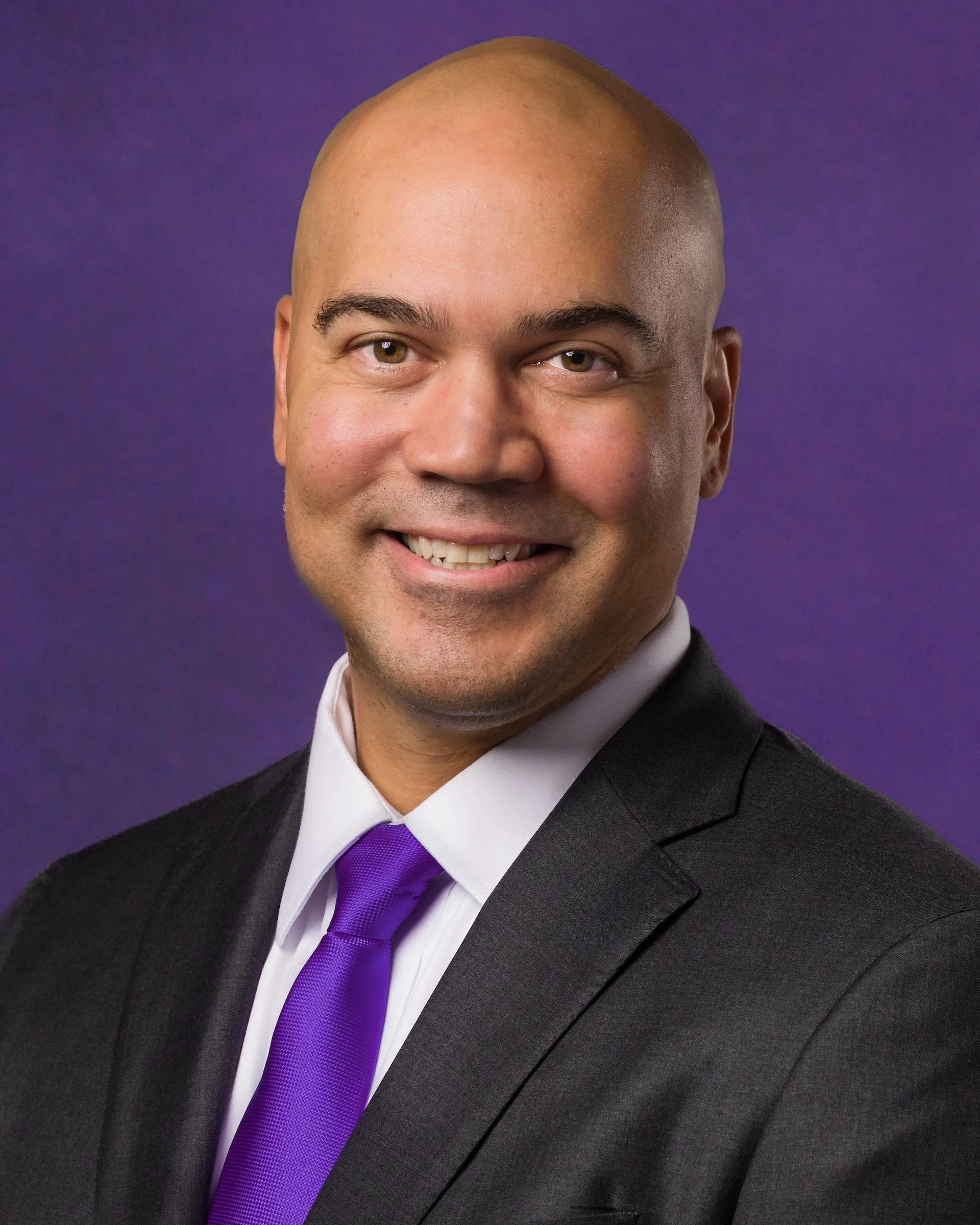
Bernard Rousseau, Ph.D., MMHC, CCC-SLP, ASHA Fellow
Marilyn and Morgan Davies Dean of Harris College of Nursing and Health Sciences
Texas Christian University
ASAHP: What led you to a career in health professions?
Dean Rousseau: My journey into the health professions began with a fascination for human communication. As a speech-language pathologist, I was drawn to understanding not only how we communicate, but how restoring communication can profoundly change a person's quality of life. That curiosity evolved into a research career focused on voice, swallowing, and laryngeal biology, supported by continuous NIH funding for nearly two decades.
Throughout my career, however, I discovered that my greatest passion extended beyond my own discipline. I became increasingly interested in how teams of health professionals work together to solve complex problems that no single profession can solve alone. Whether caring for patients, advancing scientific discovery, or preparing future clinicians, the greatest breakthroughs occur when expertise is shared across disciplines.
That belief ultimately led me into academic leadership. Today, as Marilyn and Morgan Davies Dean of the Harris College of Nursing & Health Sciences at Texas Christian University, I have the privilege of helping shape an environment where students from multiple health professions learn with, from, and about one another while preparing to improve the health of the communities they will ultimately serve.
ASAHP: Are there new strategies you're hoping to implement at your institution in your new role as Dean?
Dean Rousseau: One of my highest priorities is creating a culture where interprofessional collaboration is not simply encouraged—it becomes part of our institutional identity.
Healthcare is evolving rapidly, and our educational models must evolve alongside it. At TCU, I envision expanding opportunities for learners and faculty from nursing, nurse anesthesia, communication sciences and disorders, occupational therapy, physician associate studies, kinesiology, health sciences and public health, social work, and our PhD program to collaborate through shared learning experiences, research initiatives, simulation, community engagement, and clinical partnerships.
I also believe that colleges of nursing and health sciences have an extraordinary opportunity to become engines of innovation within their communities. By strengthening partnerships with healthcare systems, industry, philanthropy, and government, we can accelerate discovery while addressing workforce shortages and improving health outcomes.
Ultimately, my goal is to prepare graduates who not only excel within their own professions but who are equally skilled at leading and collaborating across professions to solve society's most pressing healthcare challenges.
ASAHP: Why do you think Interprofessional Collaboration is so critical to advancing the mission of health professions?
Dean Rousseau: The future of healthcare depends upon our ability to move beyond silos. Patients do not experience healthcare one profession at a time—they experience healthcare as a team. Our educational systems should reflect that reality.
Interprofessional collaboration improves communication, strengthens patient safety, expands innovation, and ultimately produces better health outcomes. It also prepares graduates for the collaborative environments they will encounter throughout their careers.
As educators, we have both an opportunity and a responsibility to intentionally create learning environments where future nurses, physician associates, occupational therapists, speech language pathologists, public health professionals, movement scientists, and countless other health-related professions learn to appreciate each other's expertise while developing mutual trust and respect.
When we educate together, we prepare future professionals to care together.
ASAHP: What do you think is most valuable about being part of a network of Deans within ASAHP?
Dean Rousseau: Leadership can sometimes feel surprisingly solitary. One of the greatest strengths of ASAHP is that it brings together leaders who understand both the tremendous opportunities and the complex challenges facing health professions education.
I value organizations that encourage collaboration over competition. No institution has all the answers, but collectively we possess remarkable experience, creativity, and wisdom. Through ASAHP, we have an opportunity to learn from one another, share innovative ideas, develop partnerships, and collectively influence the future of healthcare education nationally.
As the most recent dean at TCU, but someone not new to the deanship, I look forward not only to learning from colleagues across the country but also to contributing my experiences as a clinician, researcher, educator, and academic leader. I believe the strongest professional communities are built upon generosity, curiosity, and a shared commitment to serving others.
ASAHP: What's a little-known fact about you?
Dean Rousseau: Many people know me as a researcher and dean, but fewer know that I am fascinated by leadership itself.
Throughout my career, I have intentionally studied transformational leaders across higher education, healthcare, business, and philanthropy—not simply because I admire their accomplishments, but because I am interested in understanding how leaders create cultures where people flourish. Those lessons continue to shape how I approach academic leadership today.
Outside of work, I recently set a personal goal to learn to play the acoustic guitar. Like leadership, learning an instrument requires humility, patience, and the willingness to remain a lifelong learner. I suspect those qualities are just as important in higher education as they are in music. I am also an active fitness and outdoor enthusiast. I enjoy CrossFit, mountain biking, and fishing off the pier at our condo in Florida. My wife, Alicia, is also a speech-language pathologist. Our oldest daughter, Clara, is a sophomore at Auburn University studying Biomedical Sciences in the Pre-PA concentration. She is interested in becoming a physician associate. Our youngest daughter, Camille, is a rising junior at Brentwood High School in Nashville, Tennessee. She is interested in nursing and speech language pathology. I hear that there is a pretty good college/school at TCU for that ;-)